

How Much Does It Cost to Launch a Cannabis Brand in California?
Key Takeaways
- The cost to launch a cannabis brand in California is one of the most common questions new operators ask.
- Launching a cannabis brand in California requires navigating licensing, manufacturing, packaging, compliance, and distribution costs.
- Startup costs vary widely depending on product type, production volume, and how much is built internally versus outsourced.
- Licensing alone can run from several thousand to tens of thousands of dollars depending on license type and local jurisdiction.
- Outsourcing manufacturing and co-packing significantly reduces upfront capital requirements for new brands.
- Understanding the full cost picture before launch helps operators make smarter decisions about how to allocate resources.
The Real Cost of Launching a Cannabis Brand in California
California is the largest cannabis market in the United States.
It’s also one of the most expensive and complex markets to enter.
Between state licensing fees, local permits, manufacturing setup, packaging requirements, testing costs, and distribution, the total investment required to bring a cannabis brand to market in California can vary dramatically.
Some operators launch with a lean budget by outsourcing production and focusing entirely on brand and sales.
Others build internal manufacturing operations that require millions in capital before a single product reaches a shelf.
This guide breaks down the real costs across every major category so operators can plan accurately and make informed decisions before committing resources.
California Cannabis Licensing Costs
Before any product can be manufactured, packaged, or sold in California, operators must obtain the appropriate state and local cannabis licenses.
California’s Department of Cannabis Control (DCC) oversees state-level licensing. Local jurisdictions — cities and counties — have their own separate permitting processes, and both are required. State Licensing Fees State licensing fees vary based on license type and annual revenue. The DCC uses a tiered fee structure, so costs increase as a business grows. Retailer (Type 10) $2,500 – $96,000+ depending on revenue Distributor (Type 11) $1,000 – $75,000+ depending on revenue Manufacturer (Type 6 or 7) $2,000 – $75,000+ depending on revenue Cultivator $135 – $44,000+ depending on size Microbusiness $5,000 – $75,000+ depending on revenue Most cannabis brands launching a product line will need at minimum a manufacturer license or a relationship with a licensed manufacturer, plus a distributor license or a distribution partner. Local Permitting Costs On top of state fees, local jurisdictions charge their own permitting and application fees. These vary significantly from city to city.
In some markets, local permitting costs are minimal. In others, they can run tens of thousands of dollars in application fees alone, before any license is issued.
Some cities also require conditional use permits, environmental reviews, or other approvals that add both cost and time.
It’s important to research local requirements early in the process. Local approval is required before a state license can be issued, and local timelines can add months to a launch schedule.
Compliance and Legal Costs
Most operators also incur costs for legal counsel, regulatory consulting, and compliance support during the licensing process.
These costs vary widely depending on the complexity of the application and the level of support required, but budgeting several thousand dollars for professional guidance is common. State License Application $1,000 – $5,000+ (varies by type)
Annual State License Fee
$2,000 – $96,000+ (varies by type and revenue) Local Permit Application $500 – $25,000+ (varies by jurisdiction)
Legal and Regulatory Consulting
$2,000 – $15,000+ Compliance Setup $1,000 – $5,000+
Cannabis Manufacturing and Production Costs
Manufacturing is one of the most significant cost variables in launching a cannabis brand.
The approach you choose, building internal production or partnering with a licensed co-packer or contract manufacturer, has a major impact on startup costs, ongoing overhead, and operational complexity. Building Internal Manufacturing Building an in-house manufacturing operation gives brands full control over production. It also requires substantial upfront investment. Facility Lease $5,000 – $25,000+/month depending on size and market Manufacturing Equipment
$50,000 – $500,000+ depending on product type and volume Facility Build-Out $50,000 – $250,000+ depending on scope Production Staff $40,000 – $80,000+ per employee annually Compliance Infrastructure $10,000 – $50,000+ to set up Ongoing Maintenance $5,000 – $20,000+/year For most early-stage cannabis brands, the capital required to build internal manufacturing is difficult to justify before revenue is established.
Outsourcing to a Licensed Manufacturing Partner
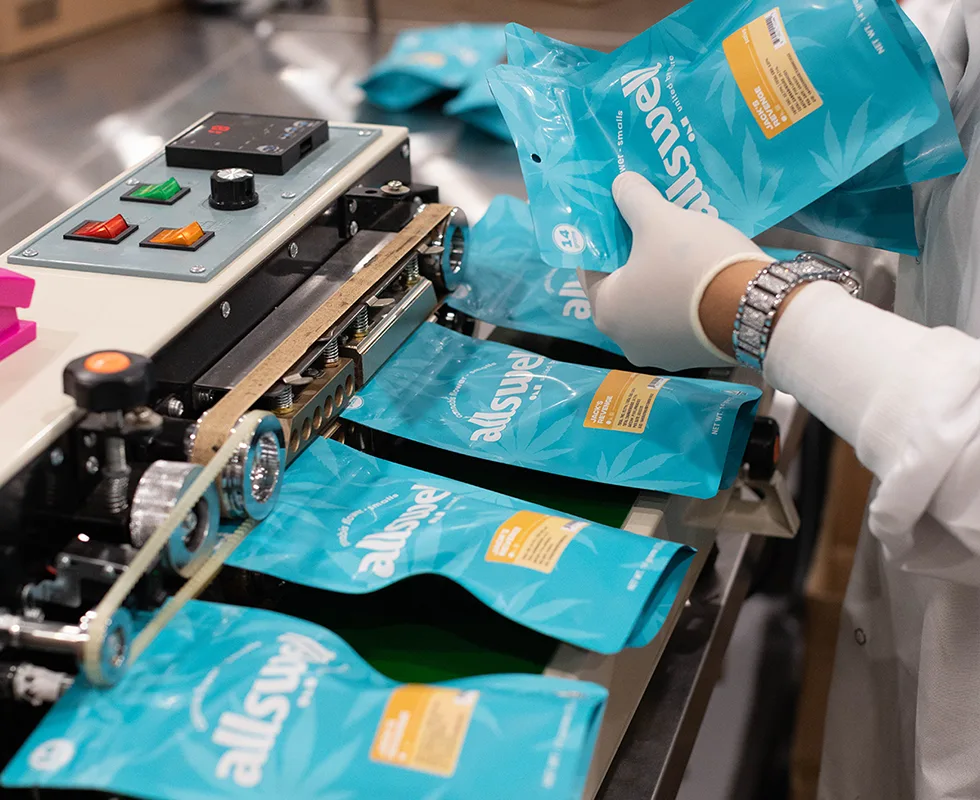
Partnering with a licensed cannabis manufacturer or co-packer allows brands to access production capacity, compliance infrastructure, and packaging capabilities without building anything internally.
Instead of large fixed costs, brands pay per unit or per run — a variable cost model that scales with production volume.
Typical outsourced manufacturing costs depend on: Product type and complexity Production volume Packaging requirements Turnaround timelines Pre-Roll Manufacturing Varies by fill weight, format, and volume Flower Packaging Varies by unit size, format, and volume Vape Cart Filling Varies by hardware, viscosity, and volume Concentrate Packaging Varies by product type and volume Compliance Packaging Included in most manufacturing arrangements
For brands focused on growth, outsourcing manufacturing often provides a faster path to market at a fraction of the upfront cost of building internal production.
Want to Launch Without Building a Facility?
At Chronic USA®, we help cannabis brands move from raw inputs to retail-ready products without the overhead of internal manufacturing.
Cannabis Packaging and Labeling Costs
California has some of the most detailed cannabis packaging and labeling requirements in the country.
Every product sold at retail must meet DCC standards for child-resistant packaging, required disclosures, warning labels, universal symbols, cannabinoid content, batch and lot numbers, and Metrc track-and-trace compliance.
Getting packaging right is not optional. Non-compliant packaging can result in products being pulled from shelves, regulatory action, and significant financial loss. Packaging Design Costs Before packaging can be produced, it needs to be designed. This typically includes:
Brand identity design (logo, typography, color system) Package structural design or dieline selection Label design for each SKU Compliance review to ensure all required elements are included
Design costs vary depending on the scope of work and whether brands work with freelancers, agencies, or in-house designers. Packaging Production Costs Once designs are finalized, packaging must be produced. Minimum order quantities, material choices, and print specifications all affect cost. Packaging Type Custom Mylar Bags Varies by quantity, size, and print spec Child-Resistant Tubes
Varies by diameter, material, and volume Glass or Plastic Jars Varies by size, material, and quantity Custom Boxes Varies by dimensions, finish, and print spec Labels Varies by size, material, and quantity Compliance Labels Often produced per batch or per run Most packaging suppliers have minimum order quantities. Brands launching with limited capital should plan packaging orders carefully to avoid over-investing in inventory before products are proven in the market.
Working With a Manufacturing Partner on Packaging
Many cannabis manufacturing partners offer packaging procurement support, which can simplify the process and reduce costs through established supplier relationships.
This is one of the less obvious advantages of working with an experienced manufacturing partner: access to their existing packaging supply chain and compliance workflows. Cannabis Testing Costs All cannabis products sold in California must pass state-required testing through a licensed third-party laboratory before entering the distribution chain.
Testing requirements vary by product type but generally include: Potency testing (cannabinoid content) Microbial testing Pesticide screening Heavy metals testing Residual solvents (for manufactured products) Moisture content (for flower) Testing is required per batch. Brands launching multiple SKUs or running frequent production batches should budget for ongoing testing costs throughout the year, not just at launch. Testing Type Estimated Cost Range
Full Panel Testing (Flower)
$200 – $500+ per batch
Full Panel Testing (Manufactured Products)
$300 – $600+ per batch Retesting (Failed Panel) Additional cost per failed panel Rush Testing Premium pricing above standard rates Many manufacturing partners have established relationships with licensed testing laboratories and can coordinate testing logistics as part of the production process.
Cannabis Distribution Costs in California
In California, cannabis products must move through a licensed distributor before reaching a retailer. Brands cannot sell directly to dispensaries without a distribution license.
Most early-stage brands work with third-party distributors rather than obtaining their own distribution license. Third-Party Distribution Fees Licensed distributors typically charge a percentage of the wholesale product value as their distribution fee. This covers transportation, storage, and coordination with retailers.
Distribution fees generally range from 15% to 30% of wholesale value, though this varies by distributor and volume. Excise Tax California cannabis excise tax is applied at the point of sale between the distributor and the retailer. As of 2025, the state excise tax rate is 15% of the average market price.
This is a cost that flows through the distribution chain and ultimately affects the economics of every sale.
Distribution License (If Self-Distributing)
Brands that want to distribute their own products need a California distributor license, which carries its own application fees, annual fees, and operational requirements.
For most early-stage brands, partnering with a third-party distributor is the more cost-effective path until volume justifies the investment in self-distribution. Distribution Cost Third-Party Distribution Fee 15% – 30% of wholesale value (varies) California Excise Tax 15% of average market price
Distributor License (if self-distributing)
$1,000 – $75,000+ annually depending on revenue Storage and Handling Varies by distributor and volume
Looking to Simplify Your Path to Market?
Chronic USA® supports brands from production through distribution-ready packaging, helping reduce the complexity and cost of getting products to retail.
Talk With Our Team
Staffing and Operational Costs
Beyond licensing, manufacturing, packaging, testing, and distribution, brands also need to account for the cost of running the business. Brand and Marketing Building a brand in California’s competitive cannabis market requires ongoing investment in marketing, content, and customer acquisition. Brand development and design
Website development and SEO
Social media and content creation Sales and retail account management Operations and Administration
Even lean cannabis brands carry operational overhead: Accounting and bookkeeping (cannabis-specific accounting is complex)
Metrc compliance and track-and-trace management Insurance (cannabis-specific policies)
Banking fees (limited banking access is a known challenge for cannabis operators) Staffing Staff requirements depend heavily on whether production is handled internally or outsourced.
Brands that outsource manufacturing can often launch with a smaller team focused on sales, brand, and operations.
Brands that build internal manufacturing need production staff, a compliance team, and operational management in addition to commercial roles.
Build Internally vs. Outsource: A Cost Comparison
One of the most important decisions a cannabis brand makes is how to handle production.
The cost implications of that decision are significant. Outsource to Partner Facility $5,000 – $25,000+/month None Equipment $50,000 – $500,000+ None Production Staff $100,000 – $500,000+/year Not required Compliance Infrastructure $10,000 – $50,000+ Included with partner Time to First Product 6 – 18+ months Weeks to a few months Scalability Limited by facility capacity Flexible by volume Ongoing Fixed Costs High Low to none For most brands launching in California, outsourcing manufacturing dramatically reduces the capital required to get products to market and allows resources to be focused on brand building, retail relationships, and growth.
What Does It Actually Cost to Launch a Cannabis Brand in California?
Putting it all together, here’s a realistic picture of what operators should budget across major cost categories.
State and Local Licensing
$5,000 – $125,000+ depending on license types and jurisdiction
Legal and Regulatory Consulting
$2,000 – $20,000+ Manufacturing Setup (outsourced) Variable per unit / per run Packaging Design $2,000 – $15,000+ depending on scope Initial Packaging Production $5,000 – $50,000+ depending on SKUs and volume Product Testing $500 – $3,000+ per launch batch Distribution 15 – 30% of wholesale revenue ongoing
Marketing and Brand Launch
$5,000 – $50,000+ depending on scope Operations and Insurance $2,000 – $10,000+/month
Total launch budgets for California cannabis brands typically range from $50,000 on the lean end (outsourced production, minimal staffing, focused SKU count) to $500,000 or more for brands building internal manufacturing or entering at significant scale.
The biggest lever most brands have is the decision to outsource manufacturing versus build internal production. That single decision can reduce startup capital requirements by hundreds of thousands of dollars.
Ready to Launch Without the Overhead of Internal Manufacturing?
Chronic USA® helps cannabis brands move from raw inputs to shelf-ready products with speed, consistency, and compliance built into every step. Our facility supports: Pre-roll manufacturing · Flower packaging · Cart filling · Concentrate packaging · White label products · Compliance packaging · Distribution support · High-volume production
How much does it cost to launch a cannabis brand in California?
Total launch costs vary significantly depending on approach and scale. Lean brands that outsource manufacturing can launch for $50,000 to $150,000. Brands building internal manufacturing operations typically require $500,000 or more before reaching market.
What licenses are required to launch a cannabis brand in California?
The specific licenses required depend on your business model. Most brands need at minimum a manufacturer license (or a relationship with a licensed manufacturer) and a distributor license (or a distribution partner). Retailers need a retailer license. All licenses require both state approval from the DCC and local permits from the city or county where the business operates.
Can I outsource cannabis manufacturing instead of building my own facility?
Yes. Many California cannabis brands outsource production to licensed manufacturing partners. This approach eliminates the need for facility leases, manufacturing equipment, production staff, and compliance infrastructure, significantly reducing startup costs and time to market.
How much do California cannabis licenses cost?
State license fees are tiered based on license type and annual revenue, ranging from a few thousand dollars for smaller operations to $75,000 or more annually for larger businesses. Local permit fees vary widely by jurisdiction and can range from a few hundred to tens of thousands of dollars.
What are the packaging requirements for California cannabis products?
California requires cannabis products to be sold in child-resistant packaging with specific labels that include the universal cannabis symbol, required warnings, net weight, cannabinoid content, batch and lot numbers, and track-and-trace information. Non-compliant packaging can result in regulatory action and products being removed from sale.
How much does cannabis product testing cost in California?
Full panel testing costs vary by laboratory and product type, but typically range from $200 to $600 per batch. Testing is required per batch, so brands launching multiple SKUs or running frequent production should budget for ongoing testing costs throughout the year.
What is cannabis co-packing and how does it reduce costs?
Cannabis co-packing is when a licensed manufacturer packages and prepares cannabis products on behalf of a brand. Instead of building internal packaging and production lines, brands provide the inputs and the co-packer handles the rest. This reduces overhead, eliminates the need for production staff, and speeds up time to market.
How does California cannabis distribution work?
In California, cannabis products must move through a licensed distributor before reaching a retailer. Most brands work with third-party distributors who charge a percentage of wholesale value, typically between 15% and 30%. California also applies a 15% excise tax on cannabis sales at the distributor-to-retailer level.
Is it cheaper to build internal manufacturing or outsource production?
For most early-stage cannabis brands, outsourcing is significantly more cost-effective. Building internal manufacturing requires facility leases, equipment purchases, production staff, and compliance infrastructure that can run into the hundreds of thousands of dollars before a single product is sold. Outsourcing converts those fixed costs into variable production costs tied to volume.
How long does it take to launch a cannabis brand in California?
Timelines vary depending on local permitting, licensing, and production setup. Brands that outsource manufacturing can move significantly faster than those building internal production. From licensing approval to first product on shelf, most operators should plan for a minimum of three to six months, with local permitting often being the longest variable in the timeline.